Empathetic AI
Rethinking Onboarding
This conceptual UX project explores how emotionally adaptive AI can transform onboarding experiences for users navigating high-stakes government service portals. From applying for immigration status to accessing healthcare or public benefits, these systems are often complex, bureaucratic, and emotionally overwhelming. Our design proposes a modular onboarding framework powered by AI, which adapts in real time to user confidence, emotional signals, and behavioral cues. To demonstrate the system in action, we apply it in depth to the USCIS N‑400 naturalization process.
Problem Statement
Government service portals are often legally complex, emotionally taxing, and difficult to navigate—especially for users accessing them for the first time. These platforms treat all users the same, offering rigid, form-first processes that overlook individual levels of digital fluency, emotional state, and cultural context.
Goals
– Reduce abandonment
– Improve emotional support,
– Build trust in government digital experiences

Reflection
This project explored how AI and emotional design can transform rigid digital services into human-centered experiences. By balancing precision with compassion, I designed a system that empowers users to navigate complex processes with clarity and confidence. In the future, I’d prototype this as a plug-in framework for services like healthcare.gov, test with non-native speakers and seniors, and explore multilingual emotional tone to expand accessibility. Ultimately, onboarding isn’t just about completing forms—it’s about building trust through thoughtful, ethical guidance.
Why not rule-based logic?
While rule-based logic works well for predictable, linear tasks, it falls short when users need flexibility, nuance, or emotional support. AI, especially large language models, excels in these moments—interpreting ambiguous input, adjusting tone based on behaviour, and offering human-like guidance that rules simply can’t replicate. In this onboarding flow, AI doesn’t just automate steps—it adapts to each user’s mindset, turning a rigid form into a responsive, empathic experience.
Future of Work
Design an
AI-Powered Project Manager
This conceptual design project explores the future of work through the creation of an AI Project Manager (AIPM) — a system designed to intelligently automate task prioritization, risk forecasting, and team coordination across digital projects. Unlike traditional tools that track tasks, AIPM acts like a proactive, learning-oriented team lead, guiding human teams by adapting to workload dynamics, emotional cues, and team performance.
Problem Statement
Modern project management is burdened by constant micro-decisions: assigning tasks, tracking delays, coordinating handoffs, and balancing workloads. These responsibilities distract project leads from strategic thinking and often lead to burnout. While tools like Asana, Jira, or Monday.com support task tracking, they don’t proactively assist in managing complexity or predicting problems before they happen.
Goals
– Automate low-level decision-making (priorities, assignments, risk flags)
– Track emotional and cognitive load across team members
– Predict bottlenecks before they occur and suggest mitigation strategies – Offer explainable AI logic to build trust and transparency
– Improve meeting efficiency and reduce status-check fatigue
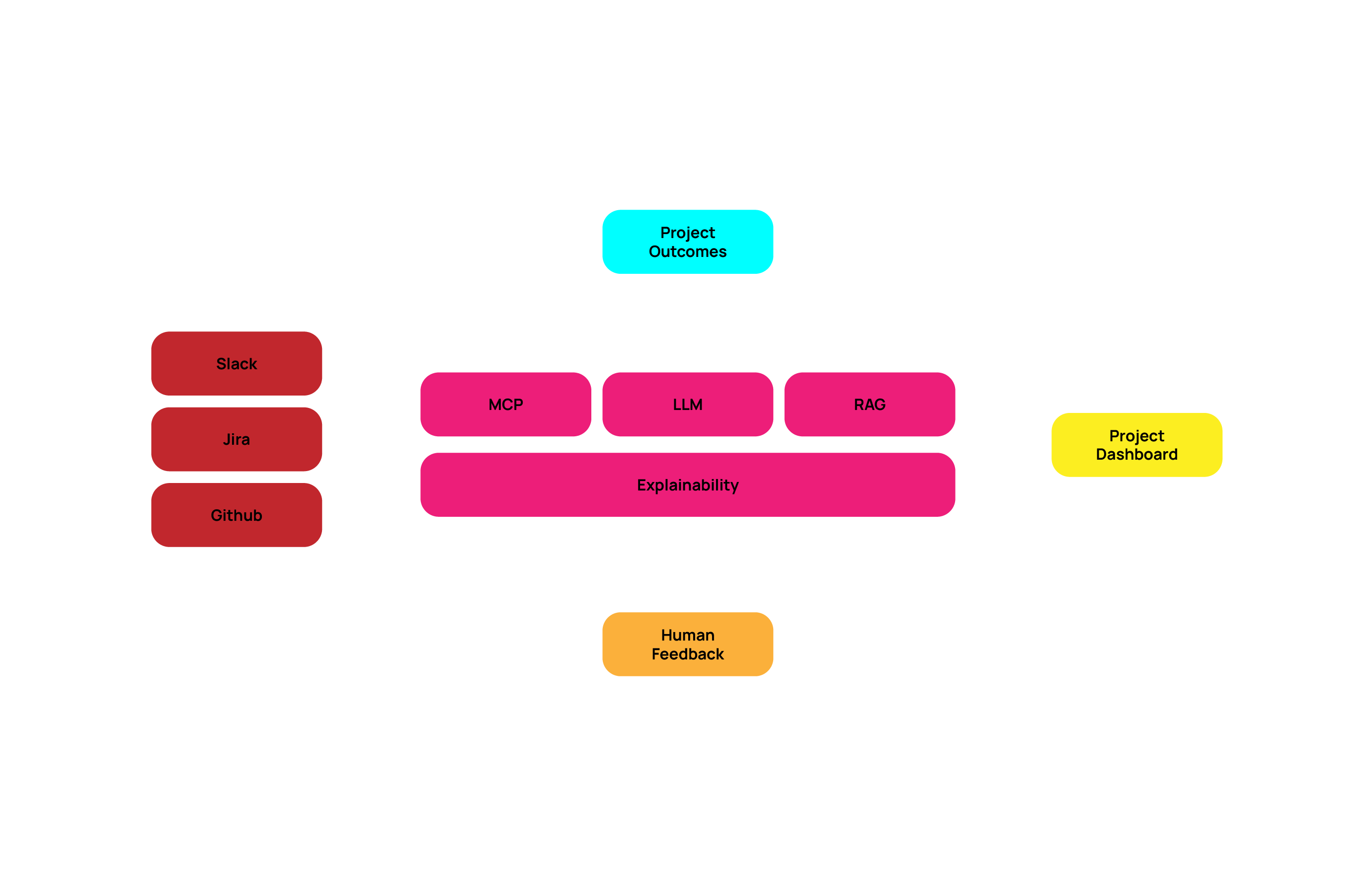
System Workflow
Project data flows from tools like Jira, GitHub, and Slack into an AI reasoning engine powered by contextual prompts (MCP) and memory retrieval (RAG). The LLM interprets current conditions, generates decisions, and provides transparent justifications through the explainability layer. Every action can be adjusted, and human feedback loops directly improve the system over time. This creates a workflow that’s not only smart and adaptive, but deeply accountable and emotionally responsive — closing the gap between automation and real-world team dynamics.
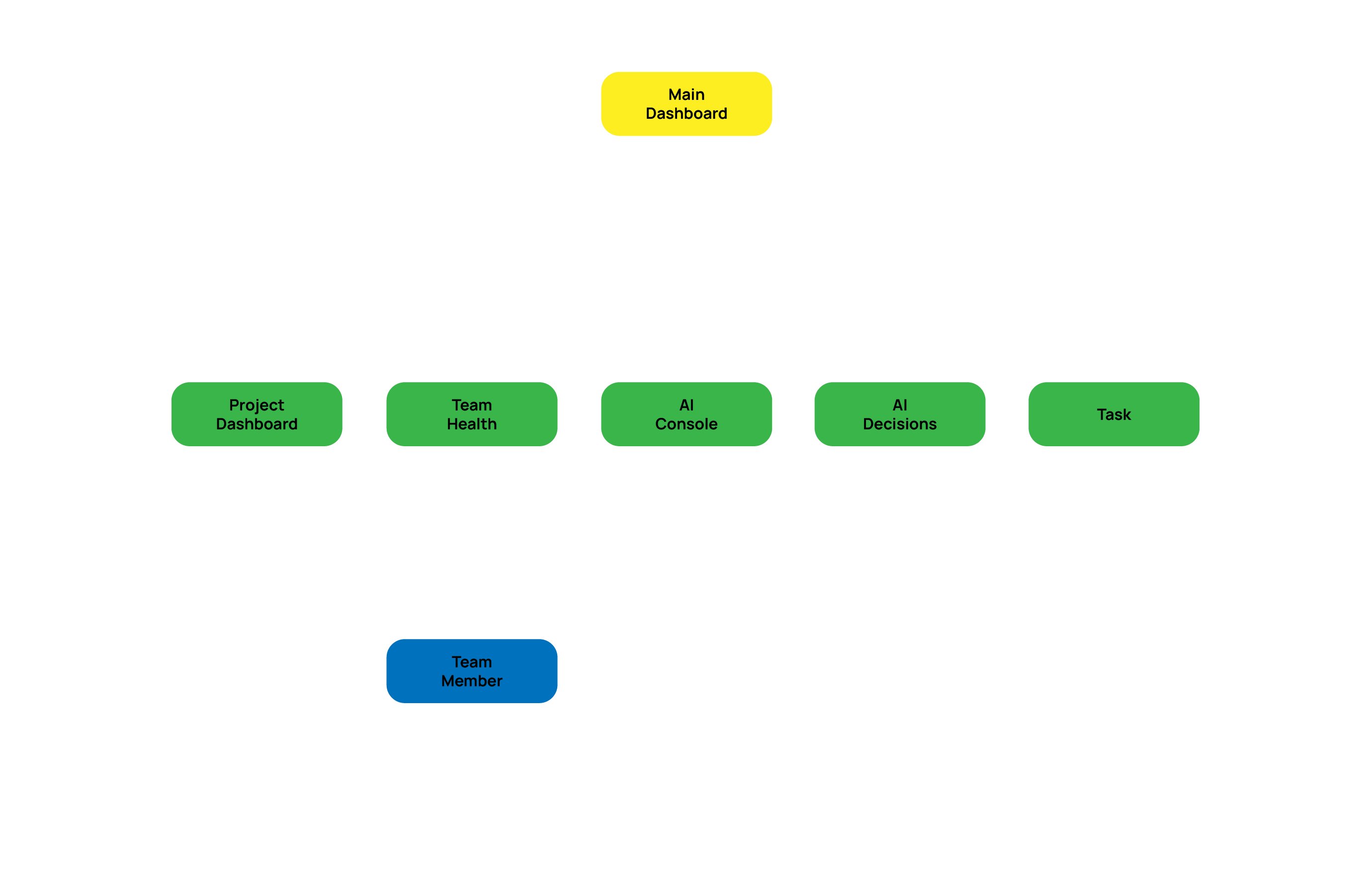
Information Architecture
AIPM’s structure is organized around user intent: project leaders start from the central dashboard and can quickly branch into task-level control, team health insights, or conversational decision-making. Content is grouped by function — strategy, execution, support — with flexible pathways between manual input and AI-suggested actions. The architecture reinforces a core principle: AI supports decision-making without removing user agency, ensuring clarity, speed, and trust across the platform.


Reflection
Designing the AI Project Manager helped me explore the balance between automation and emotional intelligence —especially in contexts where trust and transparency are critical. One of the most challenging aspects was figuring out how to represent team wellness in a way that felt supportive, not intrusive. This process reinforced the idea that AI is most valuable not as a manager, but as a strategic partner—one that augments human leadership with clarity, context, and care. The project ultimately imagines a near-future where AI doesn’t replace decision-makers, but empowers them to lead more effectively, empathetically, and at scale.
